


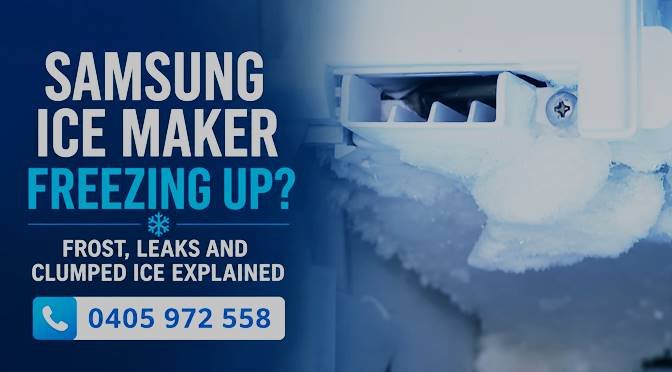
You open your Samsung fridge for ice and nothing comes out. The bucket will not move, frost is packed around the ice maker, or the cubes have frozen together into one hard block.
Sometimes the first sign is different. You notice water dripping from the dispenser, ice turning soft or slushy, or moisture appearing where it was not there before.
These symptoms can be related, but they do not all point to the same fault.
A Samsung ice maker that repeatedly freezes over can have a sealing, temperature, airflow, defrost or ice-maker problem. Clumped ice can also develop simply because ice has remained in the bucket for too long. Water underneath the crisper drawers may come from an entirely different drainage fault.
The important part is recognising the pattern before forcing the bucket out, repeatedly resetting the ice maker or assuming the whole refrigerator has failed.
This guide from Fast Fridge Repairs experts explains what the symptoms mean, what you can safely check and when the problem needs proper diagnosis.
Why Does a Samsung Ice Maker Freeze Up?
Frost forms when moisture reaches a surface cold enough for that moisture to freeze. Inside an ice compartment, this can happen when warmer, humid air enters an area designed to remain cold and relatively well sealed.
Samsung's own troubleshooting guidance identifies poor sealing around the ice bucket or dispenser flap as possible causes of frost. If the bucket does not sit correctly against the ice chute, or the dispenser flap does not close fully, warmer air can enter the ice compartment. That moisture can then freeze around the bucket and ice-maker area.
Possible areas worth investigating include:
- Ice bucket not fully seated
- Damaged or dirty bucket seal
- Dispenser flap not closing completely
- Ice or debris caught around the chute
- Refrigerator or doors out of alignment
- Temperature problems
- Excessive frost elsewhere in the compartment
- Ice-maker or control fault
One occurrence of frost does not automatically prove that a part has failed. The more useful question is whether the frost comes back after the obvious sealing and ice build-up issues have been corrected. Repeated frost is where diagnosis becomes more important.
Samsung Ice Bucket Stuck and Won't Come Out
A bucket that normally slides out but suddenly feels locked in place may have ice or frost holding it.
Do Not Force the Frozen Bucket
Samsung advises that a stuck bucket should not be forced, and its current ice-maker guidance warns against manually defrosting the ice maker because doing so can damage the unit.
The bucket removal method also varies between Samsung refrigerator designs. Some pull straight out, some lift slightly first, and others use a release mechanism.
Before doing anything else:
- Check the refrigerator's user manual for the correct bucket-removal method.
- Look for visible frost or ice around the bucket edge.
- Do not use a knife, screwdriver or other sharp object to break ice away.
- Do not apply a heat gun or concentrated heat to the ice-maker housing.
If the bucket remains frozen in place, arrange assessment rather than damaging the bucket, housing or surrounding trim. A cracked bucket or damaged seal can create another path for warm air to enter, which can make the original frost problem worse.
Why Does the Frost Keep Coming Back?
Clearing visible frost solves the immediate blockage. It does not necessarily solve the reason the frost formed. If ice repeatedly returns around the ice maker or bucket, possible causes include:
1. Poor Ice Bucket Seal
The bucket needs to sit correctly in its housing. A gap between the bucket and chute can allow warmer air into the cold ice compartment. Samsung specifically advises checking that the bucket seal is clean, undamaged and sitting properly.
2. Ice Dispenser Flap Not Closing
The dispenser flap should close after ice passes through the chute. If ice fragments, frost or debris hold that flap slightly open, room air can travel through the dispenser opening.
This can result in recurring frost, wet or slushy ice, water dripping from the dispenser, and ice freezing together inside the bucket.
3. Door or Levelling Problem
The refrigerator and doors need to sit correctly. Samsung Australia notes that poor levelling can affect the alignment between the ice maker and chute. When that alignment is wrong, warm air may enter and begin melting ice, which can later contribute to dripping or refreezing.
4. Temperature or Cooling Fault
An ice problem can sometimes be a symptom of a wider refrigerator fault. If freezer or ice-compartment temperatures are not being maintained correctly, ice may soften and refreeze.
Why Is the Ice Clumping Into One Solid Block?
Clumped ice is not always evidence of a broken ice maker. Ice cubes sitting together for long periods can soften slightly and refreeze where they touch. Samsung advises that ice left in the bucket without regular dispensing can eventually fuse together.
There are two different situations to consider:
- Occasional Clumping After Long Storage: If you rarely use the dispenser, older cubes can gradually stick together. The solution is simply to discard old ice and allow a fresh batch to be produced.
- Ice Constantly Wet, Slushy or Fused: If freshly produced ice keeps partially melting before refreezing, check for warm air entering the compartment, faulty bucket seals, open dispenser flaps, or door alignment problems.
Why Does Clumped Ice Stop the Dispenser?
The dispenser system needs loose ice to move through the bucket and chute. When cubes freeze together into a solid mass, they can jam the bucket, block the chute opening, prevent the auger motor from turning, or cause the motor to strain without delivering ice.
Do not force the dispenser mechanism against a solid block of ice.
Why Is My Samsung Ice Maker Leaking Water?
Where water appears changes the diagnosis entirely:
Water Dripping From the Dispenser
A few drops after dispensing water can be normal. Continued leaking is different. Samsung Australia recommends checking for trapped air in the water lines, filter installation, refrigerator levelling, chute ice build-up, and seal fit.
Water Around the Ice Bucket
Water inside the ice compartment develops when frost or ice partially melts due to warm-air ingress or temperature instability. Once that water freezes again, it creates a solid block of ice.
Water Under the Fresh-Food Drawers
Do not automatically blame the ice maker. Water collecting beneath crisper drawers frequently comes from a blocked or frozen defrost drain line or condensation elsewhere in the refrigerator. Repairing ice-maker components will not solve a blocked cabinet drain.
Frost Around the Ice Maker vs Frost Behind the Fridge Panel
These two symptoms represent completely different mechanical systems:
- Frost Around the Ice Bucket or Chute: Primarily points toward bucket sealing, dispenser flap issues, warm-air entry, door levelling, or local ice-compartment conditions.
- Heavy Frost Behind the Internal Rear Panel: Indicates a broader defrost or airflow fault involving the evaporator coils, defrost heater, defrost sensor, thermistor, fan motor, or main PCB.
Why Is My Samsung Ice Maker Not Making Ice?
Frost is only one possible reason. Samsung Australia's troubleshooting guidance identifies several fundamental causes of no ice production:
- Freezer compartment not cold enough
- Blocked cold-air vents
- Ice-maker electrical harness disconnection
- Bent or kinked water supply lines
- Faulty water inlet solenoid valve
- Clogged water filter
Should You Reset the Samsung Ice Maker?
A test cycle is useful when performed once. Samsung Australia provides test-button instructions for its ice makers. However, repeatedly pressing the test button when the tray already contains water or ice can cause tray overflow and severe jamming.
Can You Defrost a Frozen Samsung Ice Maker Yourself?
Warning on DIY Heat Methods
Using hairdryers, heat guns, boiling water or sharp screwdrivers can easily warp plastic housings, melt wiring insulation, puncture refrigerant lines, or crack the ice bucket. If frost is repeatedly locking the unit, the focus must be on stopping the warm-air ingress rather than applying manual heat.
What You Can Safely Check Before Calling a Technician
- Check Bucket Seating: Make sure the bucket is fully latched into its housing.
- Inspect Bucket Seals: Look for dirt, distortion or cracks along the perimeter gasket.
- Check the Dispenser Flap: Ensure no ice shards are holding the chute flap open.
- Check Door Alignment: Confirm the refrigerator doors close and seal flush.
- Note Water Origin: Record whether water is dripping from the chute, inside the bucket, or under crispers.
- Locate Model Number: Note the exact model from the inner cabinet sticker.
How a Technician Diagnoses a Repeated Ice Maker Frost Problem
A systematic diagnostic workflow follows the fault to its source:
Ice Compartment Condition
Frost pattern and density reveal where warm air enters the compartment.
Bucket & Chute Sealing
Gaskets and dispenser flap closure are tested for complete airtight seals.
Door Alignment
Cabinet levelling and hinge adjustments are verified.
Actual Temperatures
Compartment temperatures are measured against electronic display setpoints.
Ice Maker Cycling
Motor harvest cycles and fill times are tested electronically.
Water Supply Delivery
Inlet valves and water line pressure are checked for leaks or restrictions.
Sensors & Electronics
Sensor resistance curves and PCB control outputs are verified.
Wider Refrigeration Performance
Evaporator airflow and defrost system cycles are evaluated.
Samsung Ice Maker Problems by Symptom
| Symptom | Possible Areas to Investigate |
|---|---|
| Ice bucket frozen in place | Frost accumulation, warm-air ingress, bucket gasket, chute seal |
| Frost around ice maker | Bucket fit, dispenser flap obstruction, door alignment, temperature fluctuation |
| Wet or slushy ice | Warm air entering, temperature management issue, defective sealing |
| Ice cubes clumped together | Ice stored too long unused, partial melting and refreezing cycles |
| No ice being produced | Freezer temperature too high, water supply line, inlet valve, ice-maker motor |
| Water dripping from dispenser | Trapped air in water system, filter installation, chute seal gap, water line connection |
| Water under fresh-food drawers | Blocked defrost drain line, cabinet condensation, not necessarily ice-maker fault |
| Dispenser motor runs but no ice | Fused ice block, jammed chute, auger motor disengaged from bucket |
| Frost keeps returning | Unresolved sealing defect, door gasket wear, sensor or defrost control fault |
Frequently Asked Questions
Why does my Samsung ice maker keep freezing up?
Recurring frost develops when warm, humid room air enters the ice compartment through gaps around the bucket, ice chute, or dispenser flap. Door alignment and temperature control faults can also contribute. If frost returns after clearing, the underlying seal or airflow defect needs diagnosis.
Why is my Samsung ice bucket stuck?
Frost or melted refrozen ice is likely locking it in place. Do not force the bucket or pry it with sharp tools. If the bucket is frozen solid, a professional inspection is safer than risking cracked plastic housings or torn seals.
How do I unfreeze a Samsung ice maker?
Samsung advises against manually defrosting frozen ice makers with hair dryers or sharp implements due to high risk of plastic warping and component damage. Identifying why moisture reaches the compartment is the required fix.
Why does my Samsung ice keep clumping together?
Ice naturally fuses when left unused for extended periods. However, if freshly made ice becomes wet, slushy, and then refreezes into a block, warm air is entering the compartment or temperatures are fluctuating.
Why is water leaking from my Samsung ice dispenser?
Common causes include trapped air in water lines, poorly seated water filters, incorrect cabinet levelling, or an air gap around the chute allowing ice to melt into water droplets.
Why is there water underneath my Samsung fridge drawers?
A blocked or frozen defrost drain line is the most common cause. Water under drawers is rarely caused by the ice maker and usually stems from drainage or cabinet condensation issues.
Does resetting a Samsung ice maker fix frost problems?
A reset checks mechanical cycling, but it cannot fix an air leak, worn gasket, or temperature instability. If frost returns, repeated resetting will not resolve the root failure.
When to Book a Samsung Fridge Repair
If your Samsung ice maker repeatedly freezes over, the bucket gets stuck, ice turns slushy, or your refrigerator develops cooling problems at the same time, professional assessment solves the root cause.
Fast Fridge Repairs diagnoses Samsung cooling systems, ice compartments, fans, sensors, defrost circuits, and sealed refrigeration systems right across Sydney.