


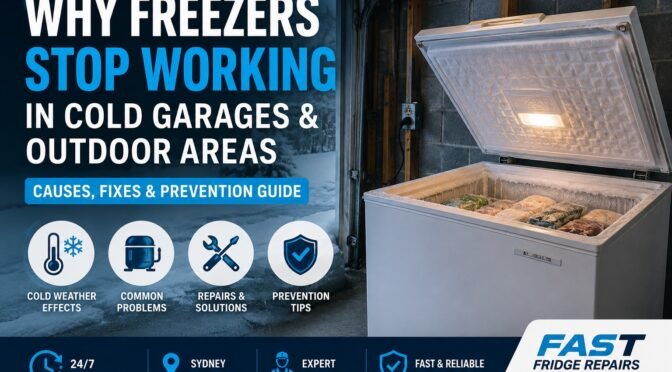
Many people assume that placing a freezer in a cold garage, shed or outdoor area helps it work more efficiently. Surprisingly, the opposite can happen. When ambient temperatures drop too low, many domestic freezers struggle to operate correctly, leading to thawing food, temperature fluctuations and unexpected breakdowns.
At Fast Fridge Repairs, we regularly help Sydney homeowners and businesses whose freezers stop working during winter or after being installed in garages, workshops, patios and other uninsulated spaces. Understanding why this happens can help you prevent expensive food loss and avoid unnecessary appliance replacement.
If your freezer has stopped freezing or isn’t maintaining safe temperatures, our technicians provide fast, professional freezer repairs across Sydney for domestic and commercial refrigeration systems.
Why Cold Weather Can Cause Freezer Problems
It sounds strange, but freezers don’t use the outside cold air to keep food frozen. Instead, they rely on a refrigeration system that operates within a specific ambient temperature range.
Most domestic freezers are designed to work efficiently when the surrounding air remains within their manufacturer’s recommended climate class. When temperatures fall below that range, the refrigeration system may not operate as intended.
Common issues include:
- Compressor not starting
- Compressor short cycling
- Thermostat confusion
- Low refrigerant head pressure
- Poor airflow through the condenser
- Temperature instability
Instead of helping the appliance, extremely cold surroundings can actually prevent normal refrigeration operation.
Can a Freezer Stop Working If It’s Too Cold Outside?
Yes.
This is one of the most common questions people ask during winter.
Most household freezers use a thermostat that monitors surrounding temperatures. When the garage or shed becomes too cold, the thermostat may mistakenly believe cooling is no longer required. As a result, the compressor doesn’t run often enough, allowing the freezer temperature to rise.
While the surrounding air feels cold, the freezer itself may slowly begin thawing food.
This issue commonly affects:
- Garage freezers
- Outdoor freezers
- Freezers in sheds
- Units installed in workshops
- Freezers kept in enclosed patios
Why Does My Freezer Stop Working in Winter?
Several refrigeration components are affected by low ambient temperatures.
1. Thermostat Confusion
Many refrigerator-freezer combinations use a thermostat located in the fresh food compartment.
When surrounding temperatures become very cold, the thermostat may never call for cooling.
This means:
- Compressor stays off
- Freezer slowly warms
- Ice cream softens
- Frozen food begins thawing
Although nothing is technically “broken,” the appliance cannot regulate temperature correctly.
2. Low Head Pressure
Professional refrigeration technicians frequently diagnose low head pressure during cold weather.
When outdoor temperatures fall significantly, the condenser removes heat too efficiently.
This changes refrigerant pressures throughout the sealed system, reducing cooling performance.
Low head pressure may result in:
- Poor cooling
- Compressor inefficiency
- Unstable temperatures
- Longer recovery times after opening the door
3. Compressor Short Cycling
Cold environments can also affect compressor operation.
Instead of running long enough to properly cool the freezer, the compressor may:
- Start briefly
- Stop unexpectedly
- Restart repeatedly
This condition is known as compressor short cycling.
Over time, repeated cycling increases wear on electrical components such as:
- Start relays
- Capacitors
- Compressor windings
4. Faulty Temperature Sensors
Modern freezers rely on electronic sensors instead of simple mechanical thermostats.
If these sensors receive inaccurate ambient readings, the control board may incorrectly regulate cooling cycles.
This can lead to:
- Temperature fluctuations
- Frost build-up
- Food thawing
- Error codes
- Continuous fan operation
Why Is My Garage Freezer Not Freezing?
A freezer installed in a garage may develop several noticeable symptoms.
Common signs include:
- Food partially thawing
- Ice cream becoming soft
- Freezer running constantly
- Compressor rarely running
- Water leaking after ice melts
- Frost appearing in unusual places
- Interior temperature rising above -18°C
If you notice any of these symptoms, don’t ignore them. Continued operation at unsafe temperatures can lead to spoiled food and expensive compressor damage.
Chest Freezer vs Upright Freezer in Cold Weather
Both appliance types can experience cold-weather issues, but they behave differently.
Chest Freezers
Chest freezers generally retain cold air better because cold air naturally settles inside the cabinet.
Advantages include:
- Better insulation
- Lower energy consumption
- Slower temperature rise during power outages
However, they can still experience thermostat and compressor problems when installed in very cold garages.
Upright Freezers
Upright freezers typically lose cold air more quickly when the door opens.
They also rely more heavily on:
- Automatic defrost systems
- Electronic temperature controls
- Internal airflow
These components may become more sensitive to low ambient temperatures.
Are Garage-Ready Freezers Different?
Yes.
Garage-ready freezers are specifically designed to operate across a much wider ambient temperature range.
Manufacturers often modify:
- Electronic controls
- Thermostat calibration
- Compressor operation
- Defrost algorithms
- Temperature sensors
If your freezer is installed in an uninsulated garage, choosing a garage-ready model can significantly reduce winter performance issues.
Can You Keep a Freezer Outside?
It depends.
A freezer should never be exposed directly to:
- Rain
- Snow
- Flooding
- Direct sunlight
- Salt air
- Excessive dust
Even if the appliance is under cover, extreme heat during summer and very cold temperatures during winter can affect refrigeration performance.
If outdoor installation is unavoidable, ensure:
- Adequate ventilation
- Weather protection
- Stable electrical supply
- Level installation
- Manufacturer-approved ambient temperatures
Common Outdoor Freezer Problems We Repair
At Fast Fridge Repairs, we regularly repair outdoor and garage freezers suffering from:
- Compressor faults
- Faulty thermostats
- Temperature sensor failures
- Refrigerant leaks
- Low refrigerant charge
- Condenser fan failure
- Evaporator fan problems
- Blocked condenser coils
- Defrost system failures
- Ice build-up
- Faulty control boards (PCB)
- Damaged door seals
- Water leaks
- Start relay failures
- Capacitor failures
Accurate diagnosis is essential because many of these faults produce similar symptoms.
Preventing Freezer Problems in Garages & Outdoor Areas
A few simple precautions can help extend the life of your appliance.
Choose the Right Location
Install the freezer where temperatures remain reasonably stable throughout the year.
Avoid areas that become extremely cold overnight.
Improve Insulation
If your garage is poorly insulated, improving wall or ceiling insulation can reduce temperature extremes.
Maintain Good Airflow
Never push the freezer tightly against a wall.
Adequate airflow around the condenser improves efficiency and prevents overheating during warmer months.
Clean Condenser Coils
Dust, grease and pet hair reduce heat transfer.
Cleaning the condenser coils regularly helps maintain proper refrigeration performance.
Check Door Seals
Damaged door gaskets allow warm air to enter the cabinet.
This causes:
- Frost build-up
- Longer compressor run times
- Increased electricity usage
- Poor food preservation
Schedule Preventative Maintenance
Commercial kitchens and businesses benefit from regular refrigeration servicing.
Routine inspections can identify worn components before they cause costly breakdowns.
When Should You Call a Freezer Repair Technician?
Some issues can be solved by adjusting the freezer’s location or checking temperature settings.
However, you should arrange professional repairs if you notice:
- Freezer no longer freezing
- Continuous compressor cycling
- Error codes
- Water leaking
- Loud clicking or buzzing
- Burning smells
- Excessive frost
- Food repeatedly thawing
- Warm temperatures despite correct settings
Ignoring these warning signs can turn a relatively inexpensive repair into a major compressor replacement.
Why Sydney Chooses Fast Fridge Repairs
Whether your freezer is installed inside your kitchen, in a garage, or servicing a commercial premises, our experienced refrigeration technicians provide prompt, reliable repairs throughout Sydney.
We repair:
- Domestic freezers
- Upright freezers
- Chest freezers
- Commercial freezers
- Medical freezers
- Display freezers
- Underbench freezers
- Integrated freezer units
Our fully equipped service vehicles carry many commonly required replacement parts, allowing us to complete many repairs during the first visit.
Frequently Asked Questions
Can a freezer stop working if it’s too cold outside?
Yes. Extremely low ambient temperatures can prevent the thermostat from activating the compressor correctly, allowing the freezer to warm up.
Why does my freezer shut off in cold weather?
Cold ambient temperatures can confuse the thermostat or electronic controls, preventing normal cooling cycles.
Can a walk-in freezer be too cold?
Commercial walk-in freezers are designed differently from domestic appliances, but refrigeration systems can still experience low head pressure and control issues in extremely cold conditions.
Why is my garage freezer thawing?
Common causes include thermostat confusion, compressor short cycling, faulty sensors, refrigerant problems or a freezer that isn’t designed for cold garages.
Are garage-ready freezers worth buying?
Yes. They are engineered to operate across a wider ambient temperature range and generally perform much better in garages and sheds.
How long will a freezer stay cold without power?
A full freezer typically keeps food frozen for around 48 hours if the door remains closed, while a half-full freezer usually maintains safe temperatures for approximately 24 hours.
Need Professional Freezer Repairs in Sydney?
If your freezer has stopped working in a garage, shed, workshop or outdoor area, don’t wait for food to spoil or a minor issue to become an expensive repair.
Fast Fridge Repairs provides expert freezer diagnostics and repairs across Sydney for domestic and commercial refrigeration systems. Whether the problem is a faulty thermostat, low refrigerant, compressor failure or a cold-weather performance issue, we’ll identify the cause and get your freezer operating safely again.
Need Professional Fridge Repairs?
Fast, reliable fridge repairs across Sydney. Available 24/7 for residential and commercial refrigeration.
📍 57 Woodburn St, Colebee NSW 2761, Australia
