


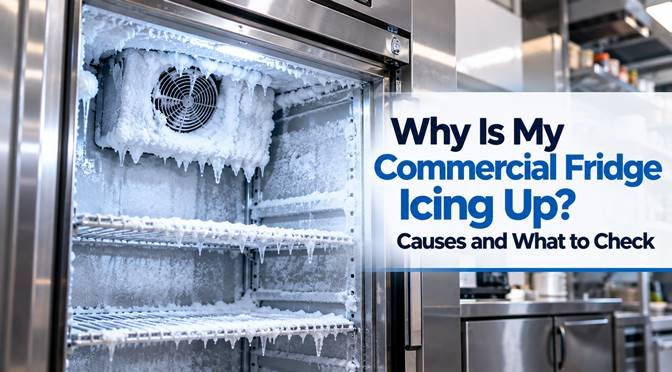
A commercial fridge can ice up when moisture accumulates faster than the defrost system removes it. Blocked airflow, doors that do not seal properly, fan faults and defrost problems can all contribute. As ice builds around the evaporator, it restricts cooling, so your refrigerator may become warmer even while parts of it are covered in ice.
For a cafe, restaurant or food retailer, this can mean rising stock temperatures and interrupted service. Finding the cause matters: simply melting the ice may leave the original fault unresolved.
This guide explains what to look for, which checks you can safely make and when to arrange professional refrigeration repairs.
Why Can an Iced-Up Fridge Still Be Warm?
The evaporator is the cold heat exchanger inside the refrigeration system. In many commercial refrigerators, a fan moves air across it and circulates cooled air through the cabinet.
When thick ice covers the coil or obstructs nearby air passages, less air can circulate and heat transfer becomes less effective. The compressor may continue running while the cabinet struggles to reach its set temperature.
Ice is therefore not proof that the refrigerator is cooling your stock correctly. Check food temperatures using your business’s temperature-monitoring procedure rather than judging performance from visible frost or the controller display alone.
Is Frost on an Evaporator Always a Problem?
A light layer of frost can develop during normal operation, depending on the equipment and operating conditions. The defrost system is designed to manage this.
More concerning signs include:
- Thick ice that remains or keeps returning.
- Ice obstructing vents or surrounding fan guards.
- Rising cabinet temperatures.
- Scraping noises near the evaporator fan.
- Repeated temperature alarms.
- Water pooling after ice melts.
Defrost arrangements differ between models. Some refrigerators use an off-cycle defrost process, while other systems use electric heaters or another method. Diagnosis should follow the equipment’s specifications.
Common Causes of Commercial Fridge Ice Build-Up
Investigating ice build-up requires examining the full thermodynamic balance of the system. The 6 most frequent causes include:
Stock Is Blocking the Airflow
Cartons, containers and ingredients can obstruct supply or return-air openings when shelves are overloaded or stock is pushed against internal vents.
Check the manufacturer’s loading limits and leave the specified clearances around air passages. Moving stock away from blocked vents may improve circulation, but existing heavy ice or recurring problems still need attention.
On prep counters, follow the specified pan arrangement and loading instructions. If the ingredient rail and refrigerated base behave differently, mention this when booking salad bar fridge repairs.
Warm, Moist Air Is Entering Through the Doors
Frequent door openings, damaged gaskets or doors that do not close fully allow humid air into the cabinet. Moisture can then condense and freeze on cold surfaces.
Look for torn seals, trapped packaging, misaligned doors and stock preventing closure. Note whether icing is concentrated near a doorway or increases during busy periods.
The Evaporator Fan Is Not Working Correctly
A failed fan motor or obstructed fan blade can reduce circulation. Sometimes ice itself obstructs a fan, so the technician needs to establish which problem occurred first.
A quiet fan is not automatically faulty: some models stop their fans when a door opens or during defrost. Avoid diagnosing the motor from sound alone.
The Defrost System Is Not Clearing the Ice
Depending on the model, a failed heater, sensor, timer or controller can prevent effective defrosting.
Ice may disappear after a shutdown and return once the unit resumes operation. This pattern is useful information for the technician, but it does not identify the failed component by itself.
Meltwater Cannot Drain Away
A blocked or frozen drain can leave water collecting where it refreezes. Ice around the drain pan or cabinet floor may therefore need a different investigation from frost covering the evaporator.
Heatcraft’s service guidance includes checks of airflow, fan operation, defrost controls, heaters and drainage when investigating refrigeration performance and abnormal icing.
Sensors, Controls or Refrigeration Components Need Testing
An incorrect sensor reading or controller fault can affect cooling and defrost operation. Refrigerant-flow problems can also produce abnormal frost patterns.
These possibilities require testing. Ice alone does not establish that the fridge needs more refrigerant or a replacement controller. For example, Hoshizaki’s model-specific troubleshooting guidance identifies several possible causes of evaporator freeze-up, including fan, controller and refrigerant-system faults.
Commercial Fridge Losing Temperature in Sydney?
Speak directly with our duty refrigeration technician for fast diagnosis and same-day service.
Safe Appliance Checks Before Calling a Technician
You can gather useful information without opening electrical panels or removing evaporator covers:
- Record temperatures and alarms: Note the display reading, any error code and when the problem started. Check food temperatures using your normal monitoring procedure.
- Check visible air passages: Move stock away from accessible vents and observe the manufacturer’s loading limits.
- Check door closure: Look for obstructions, damaged seals or a door that sits unevenly.
- Photograph visible ice: Record its location without removing guards or reaching towards fans.
- Note recent changes: Mention a power interruption, unusually heavy loading, previous repairs or changes to controller settings.
- Find the model number: A photo of the identification label helps the repairer identify the equipment.
Do not chip ice away with sharp tools, use a hairdryer or heat gun, bypass controls, or adjust technical controller settings without guidance. These actions can puncture delicate copper coils, ignite flammable refrigerants, damage sensors or create severe electrical shock hazards.
If there is a burning smell, repeated electrical tripping or water near electrical components, stop using the equipment immediately and obtain professional assistance.
Protect Your Stock While the Fridge Is Not Holding Temperature
For refrigerated potentially hazardous food, the usual requirement is 5°C or colder, unless your business has a demonstrated safe alternative temperature-control system.
If temperatures are rising:
- Follow your food-safety procedures and notify the responsible staff member.
- Record food temperatures and the relevant times.
- Transfer suitable stock to working refrigeration where appropriate.
- Assess affected food using its temperature history, not its appearance or smell.
Moving food into another fridge does not erase time already spent outside safe temperature control. Where applicable, follow the FSANZ two-hour/four-hour rule, counting cumulative time. If that history is unknown, do not assume the food is safe.
Why Does the Ice Return After Defrosting?
Defrosting removes accumulated ice. It does not necessarily correct the fault that caused it.
A leaking door seal, restricted air passage, failed fan or defrost problem can remain after the coil clears. Once cooling resumes, ice may build again.
Follow the manufacturer’s instructions or a technician’s advice before attempting a manual defrost. Protect the stock first and allow for meltwater. Repeated shutdowns should not become a substitute for diagnosis.
For recurring problems in a walk-in system, arrange coolroom repairs and explain how quickly the ice returns after defrosting.
What Will a Refrigeration Technician Check?
The inspection depends on the model, symptoms and location of the ice. It may include:
- Air circulation, stock placement and door sealing.
- Evaporator fan operation.
- Temperature sensors and displayed readings.
- Defrost settings and relevant components.
- Drainage.
- Refrigeration-system performance.
The purpose is to identify why icing is occurring before recommending replacement parts.
A controller should be replaced when testing confirms it is faulty. A probe, wiring or configuration issue may need a different solution. Similarly, a refrigerant problem should be investigated rather than assuming every iced-up coil needs re-gassing.
Fast Fridge Repairs provides commercial refrigeration diagnosis and repairs across Sydney, with the recommended work and pricing explained before proceeding.
How to Reduce Recurring Ice Build-Up
Daily operating habits and model-specific maintenance can help reduce avoidable problems:
- Keep stock within loading limits and clear of vents.
- Close doors promptly and report damaged seals.
- Follow the specified arrangement for shelves, pans and covers.
- Keep temperature records and investigate repeated alarms.
- Follow the manufacturer’s cleaning and servicing schedule.
- Avoid changing defrost settings to hide a recurring fault.
For each appliance, use its own manual. Clearances, defrost methods and maintenance requirements can differ even between similar-looking cabinets.
Frequently Asked Questions
Is an evaporator icing up the same as a fridge freezing food?
No. Evaporator icing concerns ice accumulating on the cooling coil or nearby components. Food freezing in a fresh-food compartment may involve temperature settings, sensor readings or air distribution. Tell the technician exactly where you see ice and which products or compartments are affected.
Does ice build-up mean the compressor needs replacing?
No. Icing alone does not establish a compressor fault. Airflow, door sealing, fans, defrost operation and other components may need checking first.
Should I turn the temperature setting lower?
Lowering the setting does not remove an airflow obstruction or fix a defrost fault. Record the current setting and seek advice rather than repeatedly adjusting it to compensate for poor cooling.
Can I keep using a commercial fridge that is icing up?
Do not rely on it for temperature-sensitive stock if you cannot verify that it maintains the required conditions. Follow your food-safety procedures and arrange inspection if temperatures rise, alarms recur or ice obstructs the fan.
Can Fast Fridge Repairs attend outside business hours?
Yes. Fast Fridge Repairs offers after-hours and weekend assistance, with same-day appointments available. Call to confirm the next visit and applicable charges.
Need Help With a Commercial Fridge That Keeps Icing Up?
Fast Fridge Repairs helps Sydney businesses diagnose refrigerator, freezer and coolroom faults, including recurring ice build-up and poor cooling.
When you call, tell us the brand, model, suburb, temperature readings and where the ice is forming. Confirm call-out inclusions and any additional charges when booking.
